
elitefts EZ Spotting Straps
Spotting Straps That Do the Job
If you've trained long enough, you've seen what happens when someone misses a heavy squat, and the bar hits metal safeties at full speed. It bounces. The lifter tries to react. The spotters scramble. It's a mess — and it doesn't have to be.
Spotting straps change the math on a missed lift. Instead of a hard collision with a pin or spotter arm, the bar contacts the strap and settles. It lands directly beneath the connection point and stops there. No bounce. No roll. No chaos. That's how a missed lift should end.
The Simple Setup
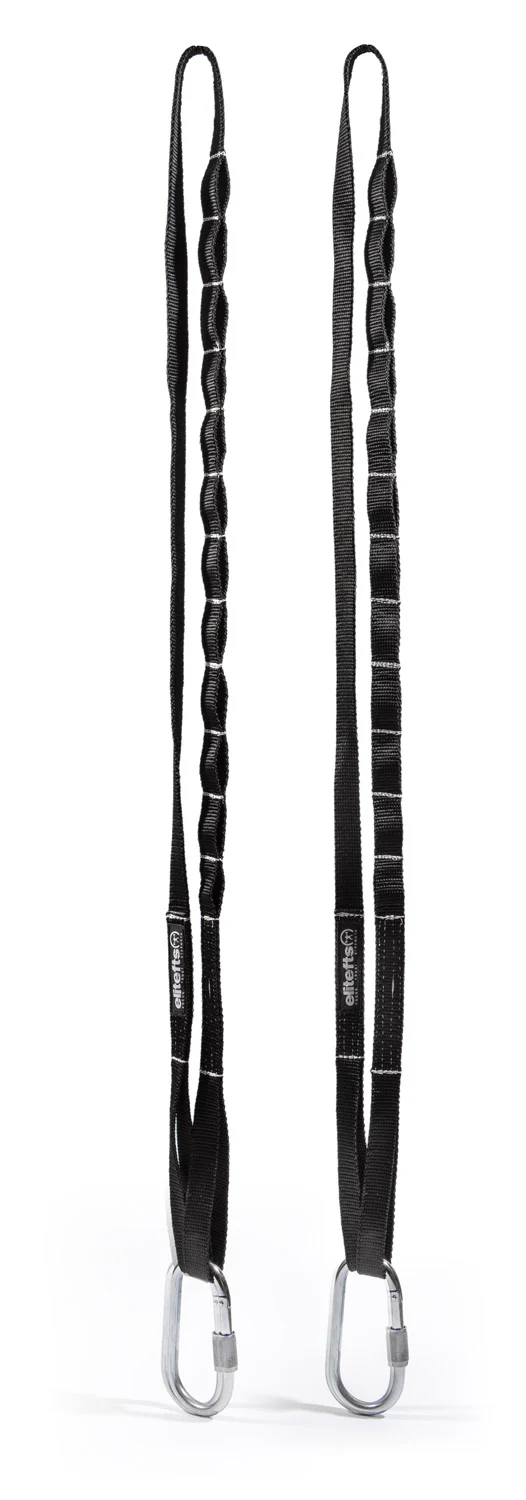
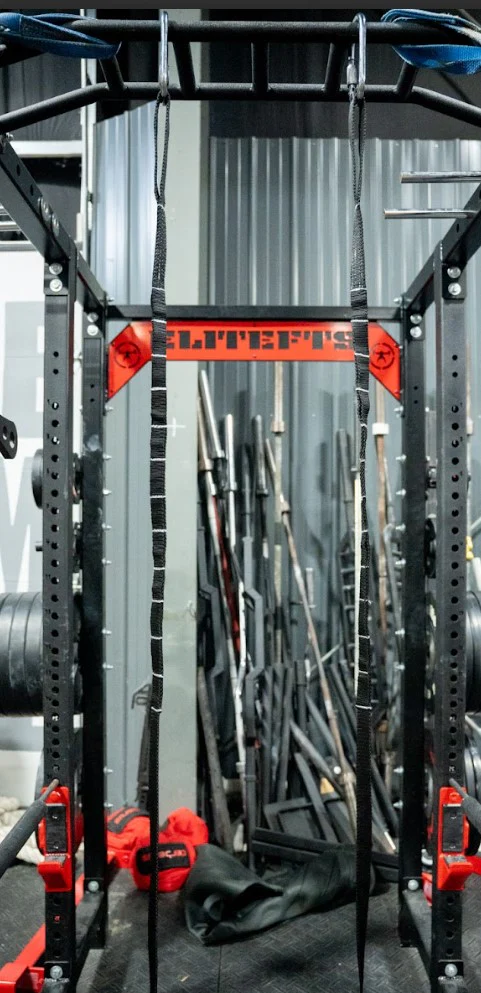
The EZ Spotting Straps required separate HD loop hardware and a numbering system for height adjustments. This design is more direct. Each strap comes with a screw-lock carabiner already attached. Clip to the rack, wrap around the bar, and you're done. Fewer pieces, faster adjustments — especially when you're working through a group session and need to change heights between athletes.
Where These Get Used
Squat and bench press safety. The main job. These straps give you a controlled catch on a missed lift, so neither the lifter nor the spotters have to deal with a bouncing bar.
Concentric-only training. Also called bottom-up work. You pull the bar off the straps at the start of each rep instead of lowering into the bottom position. This builds starting strength and eliminates the eccentric. Spotting straps make setting a repeatable start position far easier than trying to land a bar precisely on metal safeties.
Solo training. For lifters without a training partner, straps provide a functional safety net that hard safeties can't match. The bar doesn't bounce into your legs or torso on a miss.
What You Get
- Sold as a pair
- Screw-lock carabiners are included on each strap
- Compatible with standard power racks
- Built for squat and bench press applications
Common Questions
What's the difference between these and the EZ Spotting Straps?
The EZ system used separate HD loops and a numbered adjustment setup — more hardware, more steps. These straps have carabiners built in and work with fewer components. Same core result: the bar settles on a miss instead of bouncing off hard metal.
What racks do these work with?
Standard power racks. If you have questions about compatibility with a specific rack, contact the elitefts strength equipment team directly.
Do I still need a spotter with these in place?
Spotting straps significantly reduce the danger of a missed lift, but they're not a substitute for smart training decisions. Know your limits, especially when training alone.
Can I use these for bench press?
Yes. Set the strap height so the bar catches just below your sticking point. They also work well for bottom-up bench variations where you pull from a dead stop each rep.
How do I set the right height?
You want the bar to catch before it reaches your body on a true miss. Test with an empty bar before loading. When in doubt, set them slightly lower than you think you need.
Original: $89.95
-65%$89.95
$31.48More Images
elitefts EZ Spotting Straps
Spotting Straps That Do the Job
If you've trained long enough, you've seen what happens when someone misses a heavy squat, and the bar hits metal safeties at full speed. It bounces. The lifter tries to react. The spotters scramble. It's a mess — and it doesn't have to be.
Spotting straps change the math on a missed lift. Instead of a hard collision with a pin or spotter arm, the bar contacts the strap and settles. It lands directly beneath the connection point and stops there. No bounce. No roll. No chaos. That's how a missed lift should end.
The Simple Setup
The EZ Spotting Straps required separate HD loop hardware and a numbering system for height adjustments. This design is more direct. Each strap comes with a screw-lock carabiner already attached. Clip to the rack, wrap around the bar, and you're done. Fewer pieces, faster adjustments — especially when you're working through a group session and need to change heights between athletes.
Where These Get Used
Squat and bench press safety. The main job. These straps give you a controlled catch on a missed lift, so neither the lifter nor the spotters have to deal with a bouncing bar.
Concentric-only training. Also called bottom-up work. You pull the bar off the straps at the start of each rep instead of lowering into the bottom position. This builds starting strength and eliminates the eccentric. Spotting straps make setting a repeatable start position far easier than trying to land a bar precisely on metal safeties.
Solo training. For lifters without a training partner, straps provide a functional safety net that hard safeties can't match. The bar doesn't bounce into your legs or torso on a miss.
What You Get
- Sold as a pair
- Screw-lock carabiners are included on each strap
- Compatible with standard power racks
- Built for squat and bench press applications
Common Questions
What's the difference between these and the EZ Spotting Straps?
The EZ system used separate HD loops and a numbered adjustment setup — more hardware, more steps. These straps have carabiners built in and work with fewer components. Same core result: the bar settles on a miss instead of bouncing off hard metal.
What racks do these work with?
Standard power racks. If you have questions about compatibility with a specific rack, contact the elitefts strength equipment team directly.
Do I still need a spotter with these in place?
Spotting straps significantly reduce the danger of a missed lift, but they're not a substitute for smart training decisions. Know your limits, especially when training alone.
Can I use these for bench press?
Yes. Set the strap height so the bar catches just below your sticking point. They also work well for bottom-up bench variations where you pull from a dead stop each rep.
How do I set the right height?
You want the bar to catch before it reaches your body on a true miss. Test with an empty bar before loading. When in doubt, set them slightly lower than you think you need.
Product Information
Product Information
Shipping & Returns
Shipping & Returns
Description
Spotting Straps That Do the Job
If you've trained long enough, you've seen what happens when someone misses a heavy squat, and the bar hits metal safeties at full speed. It bounces. The lifter tries to react. The spotters scramble. It's a mess — and it doesn't have to be.
Spotting straps change the math on a missed lift. Instead of a hard collision with a pin or spotter arm, the bar contacts the strap and settles. It lands directly beneath the connection point and stops there. No bounce. No roll. No chaos. That's how a missed lift should end.
The Simple Setup
The EZ Spotting Straps required separate HD loop hardware and a numbering system for height adjustments. This design is more direct. Each strap comes with a screw-lock carabiner already attached. Clip to the rack, wrap around the bar, and you're done. Fewer pieces, faster adjustments — especially when you're working through a group session and need to change heights between athletes.
Where These Get Used
Squat and bench press safety. The main job. These straps give you a controlled catch on a missed lift, so neither the lifter nor the spotters have to deal with a bouncing bar.
Concentric-only training. Also called bottom-up work. You pull the bar off the straps at the start of each rep instead of lowering into the bottom position. This builds starting strength and eliminates the eccentric. Spotting straps make setting a repeatable start position far easier than trying to land a bar precisely on metal safeties.
Solo training. For lifters without a training partner, straps provide a functional safety net that hard safeties can't match. The bar doesn't bounce into your legs or torso on a miss.
What You Get
- Sold as a pair
- Screw-lock carabiners are included on each strap
- Compatible with standard power racks
- Built for squat and bench press applications
Common Questions
What's the difference between these and the EZ Spotting Straps?
The EZ system used separate HD loops and a numbered adjustment setup — more hardware, more steps. These straps have carabiners built in and work with fewer components. Same core result: the bar settles on a miss instead of bouncing off hard metal.
What racks do these work with?
Standard power racks. If you have questions about compatibility with a specific rack, contact the elitefts strength equipment team directly.
Do I still need a spotter with these in place?
Spotting straps significantly reduce the danger of a missed lift, but they're not a substitute for smart training decisions. Know your limits, especially when training alone.
Can I use these for bench press?
Yes. Set the strap height so the bar catches just below your sticking point. They also work well for bottom-up bench variations where you pull from a dead stop each rep.
How do I set the right height?
You want the bar to catch before it reaches your body on a true miss. Test with an empty bar before loading. When in doubt, set them slightly lower than you think you need.